
Journalism before the novels
García Márquez worked at El Universal in Cartagena in 1948 and later at El Heraldo in Barranquilla. Journalism was an early profession and remained part of his public working life alongside fiction.
Fundación GaboFAN REACTIONS
Loading reactions…
Reactions on HowSociable. One saved choice per browser; change it anytime.
Life & work
Biography and career records reviewed 23 Oct 2026.
García Márquez’s work connects the discipline of journalism with the narrative worlds of his fiction. One Hundred Years of Solitude became a central book in that career, followed by works including The Autumn of the Patriarch and Chronicle of a Death Foretold.
Fundación GaboInstituto CervantesHis Nobel Prize in Literature recognized the author’s achievement in 1982. His own reflections on journalism remain useful context for readers who know him principally as a novelist.
Fundación GaboPersonal profile
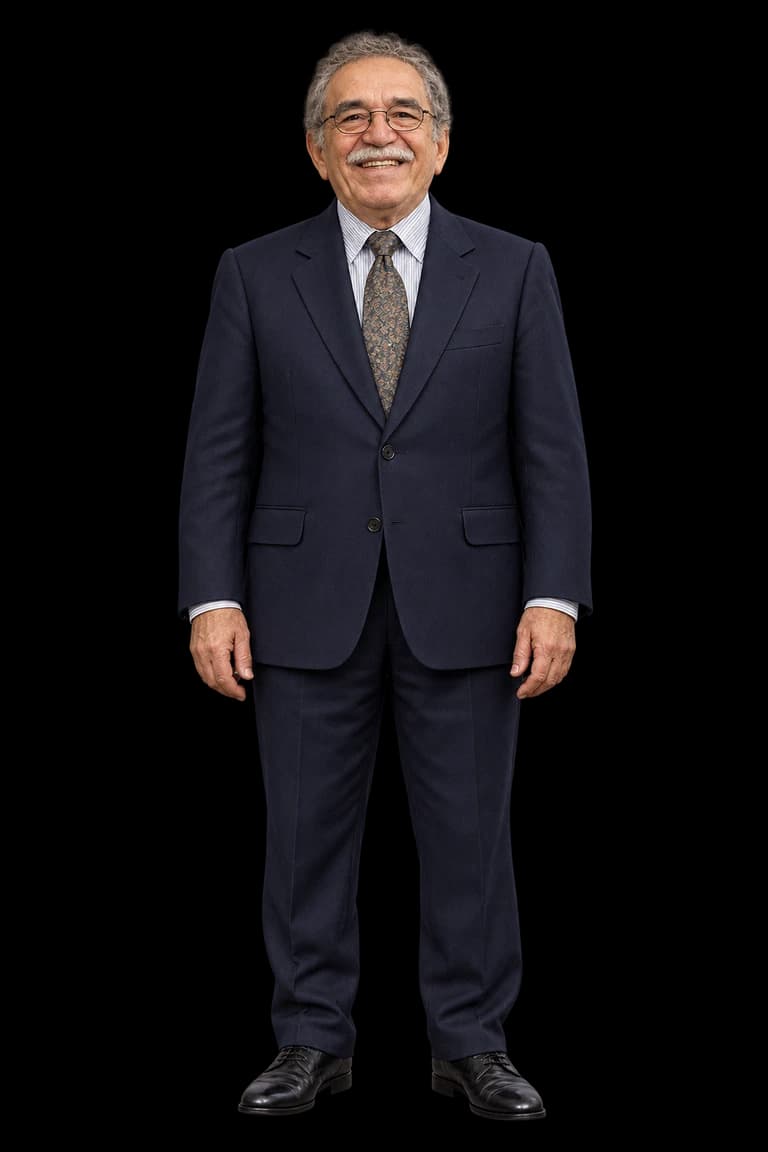
García Márquez worked at El Universal in Cartagena in 1948 and later at El Heraldo in Barranquilla. Journalism was an early profession and remained part of his public working life alongside fiction.
Fundación GaboThe Spanish One Hundred Years of Solitude appeared in 1967; its English translation followed in 1970. The original and translated publication dates describe different editions.
UNESCOOne Hundred Years of Solitude brings the Buendía family and Macondo into a single long narrative. A useful reading aid is a family tree: recurring names and patterns can make the generations seem to fold into one another. The Fundación Gabo’s account places the novel within an earlier body of Macondo writing, including Leaf Storm. The fictional town is therefore more than a picturesque setting invented for one book.
Fundación GaboAracataca’s relationship to García Márquez’s childhood helps explain the sources of that imagined geography, but Macondo is not a documentary map. His Nobel lecture is a useful companion because it addresses the difficulty of representing Latin American history to outside readers. Read the extraordinary events alongside power, collective memory and everyday material life; ‘magical realism’ is a starting description, not an explanation that makes historical context unnecessary.
Fundación GaboNobel PrizeChronicle of a Death Foretold offers a more concentrated fictional investigation than the multigenerational One Hundred Years of Solitude. News of a Kidnapping belongs to his reporting, while Living to Tell the Tale is memoir. These labels matter when checking an anecdote or quotation: a novelist’s invented event is not automatically a report of something he witnessed. Keep the work and translator attached to English quotations, particularly when wording circulates as an unattributed inspirational saying.
Fundación GaboFundación GaboIn pictures
Photographs with their original credits. Historical images do not imply a current appearance.

The published record
Dated selections from the published record.
Quick answers
Answers grounded in the sources below.
Yes. Journalism was a continuing part of his working identity.
Fundación Gabo1967 in Spanish; the English translation followed in 1970.
UNESCOThe source notes
An independent HowSociable profile. Not affiliated with or endorsed by Gabriel García Márquez.
Publication dates refer to the work or edition identified by the cited source. Translations, later editions and adaptations may have different titles and dates.
This is an editorial selection, not a ranking of literary quality. Biographical facts, publication history and interpretation are distinguished through citations to publishers, archives and literary institutions.
Checked
Checked
Checked
Checked
Checked
Checked