
A multilingual city
The Prague museum places Kafka within the city where he lived and worked. Describing him as a German-language writer preserves a useful distinction between language and present-day national borders.
Franz Kafka MuseumFAN REACTIONS
Loading reactions…
Reactions on HowSociable. One saved choice per browser; change it anytime.
Life & work
Biography and career records reviewed 23 Oct 2026.
Kafka lived and worked in Prague and wrote in German. His fiction includes The Metamorphosis and the unfinished novels The Trial and The Castle, much of it published only after his death.
Austrian Franz Kafka SocietyFranz Kafka MuseumThe record of his work requires particular care with dates. A manuscript’s composition, its later publication and the edition a reader holds can represent separate moments.
Austrian Franz Kafka SocietyPersonal profile
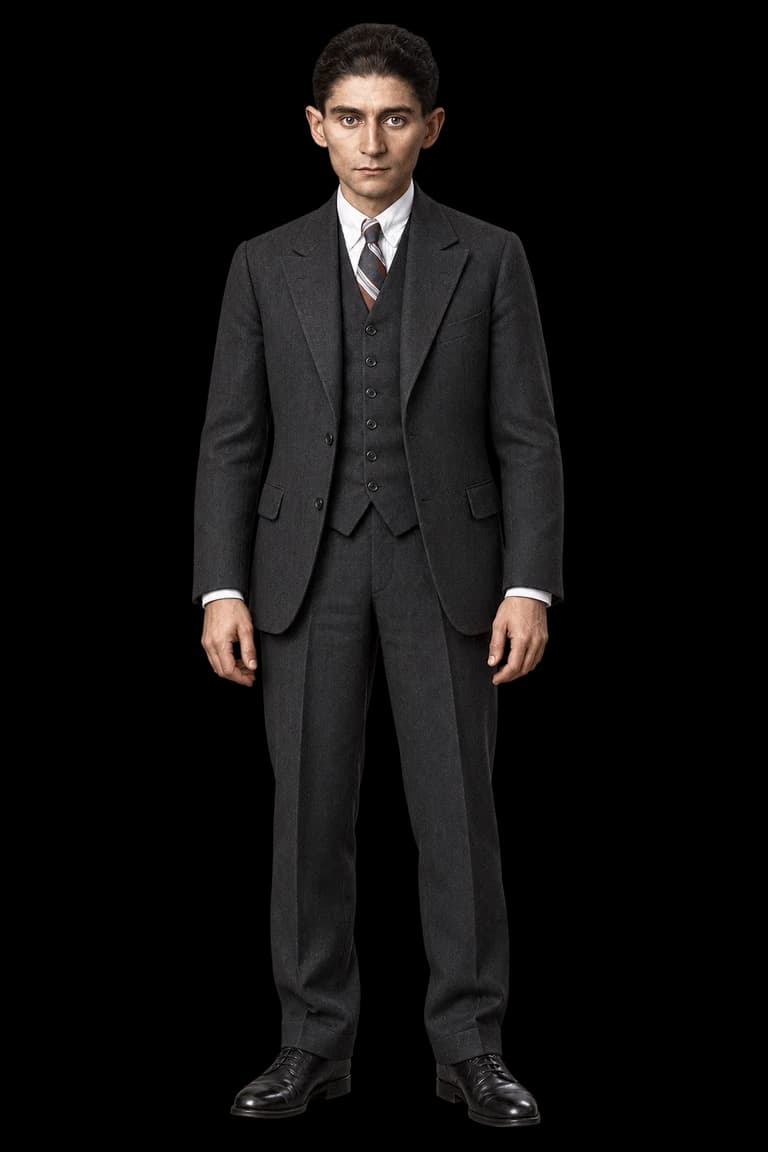
The Prague museum places Kafka within the city where he lived and worked. Describing him as a German-language writer preserves a useful distinction between language and present-day national borders.
Franz Kafka MuseumOnly part of Kafka’s writing appeared during his lifetime. Max Brod preserved and published manuscripts after Kafka’s death, despite the writer’s request that his unpublished work be destroyed.
Franz Kafka MuseumThe Metamorphosis begins with Gregor Samsa’s transformation and then makes the household deal with it. That choice is central to its effect: the extraordinary event does not remove practical questions of work, care, shame and dependence. Read how the family’s responses change over time. The story can be disturbing and darkly comic in the same passage, so a reading that treats every detail as a single fixed symbol may miss its shifts of tone.
Penguin Random HouseThe Trial and The Castle pose a different problem for readers because their surviving texts are unfinished. A missing resolution is not permission to supply an ending as though Kafka wrote it. In The Castle, K.’s efforts to gain access generate more intermediaries, conversations and obstacles. Following those processes is more revealing than treating ‘Kafkaesque’ as a loose synonym for any frustrating situation.
Cambridge University PressMax Brod’s role in publishing Kafka after his death makes editorial history especially important. Check whether an edition explains the manuscript it follows, the arrangement of fragments and its translator’s choices. A volume of complete stories and a posthumous novel do not have the same textual history. The museum’s account of Kafka’s insurance work also helps keep the biography specific: office employment was part of his life, but it does not provide a single key that decodes every fiction.
Penguin Random HouseFranz Kafka MuseumIn pictures
Photographs with their original credits. Historical images do not imply a current appearance.

The published record
Dated selections from the published record.
Work began on the novel; this is a composition date, not its publication year.
Austrian Franz Kafka SocietyQuick answers
Answers grounded in the sources below.
No. The milestones explicitly distinguish composition from publication.
Austrian Franz Kafka SocietyThe source notes
An independent HowSociable profile. Not affiliated with or endorsed by Franz Kafka.
Publication dates refer to the work or edition identified by the cited source. Translations, later editions and adaptations may have different titles and dates.
This is an editorial selection, not a ranking of literary quality. Biographical facts, publication history and interpretation are distinguished through citations to publishers, archives and literary institutions.
Checked
Checked
Checked
Checked
Checked